Immigration Helps to Meet the Demand for Skilled Labour
 German Economic Institute (IW)
Immigration makes a valuable contribution to securing the availability of a skilled workforce in Germany. Roughly 27 per cent of the immigrants who came to Germany between 1999 and 2009 had a university degree. Nearly one in eight immigrants was an engineer, a scientist or a physician, professions which were broadly in demand by firms and institutions across Germany. Labour market participation is higher than in the past. Furthermore, the proportion of highly skilled immigrants occupying specialized professional and managerial positions (ISCO 88 major groups 1 and 2) rose from 12 to 21 per cent between 2000 and 2009. In this respect, recent immigrants holding a university degree in mathematics, computer science, the natural sciences, engineering or medicine are estimated to have created additional value added totalling roughly 13 billion euros in 2009.
Download | PDF
Immigration Helps to Meet the Demand for Skilled Labour
German Economic Institute (IW)
Making Apprenticeships a Success: From Marketing to Hiring
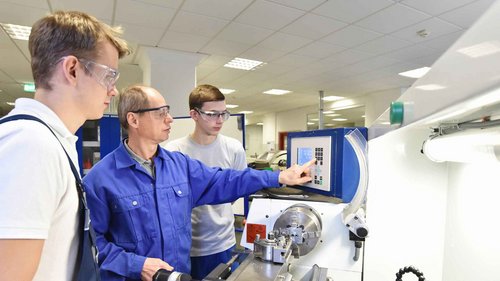
In-company vocational training is a key factor in securing skilled labour. The first step in investing in future employees is to approach and recruit new apprentices. For many companies, filling the apprenticeship positions they offer is a challenge.
IW
Skilled immigration via the Opportunity Card
The Opportunity Card is one of the most popular new provisions of the German Skilled Immigration Act and makes it easier for third-country nationals to access the labour market – but the regulation has been difficult to implement so far and is still unknown to many employers.
IW