Skilled Workers over 65
IW-Trends
 German Economic Institute (IW)
Workers aged 65 and over can make an ever greater contribution to securing the supply of skilled labour in Germany. They continue to grow as a proportion of the population and are increasing gainfully employed. While only 5.0 per cent of 65- to 74-year-olds were employed in the year 2005, by 2013 this share had risen to 8.7 per cent and thus slightly exceeded the EU average. However, there are considerable regional differences, with the share of those employed in 2012 varying between 10.5 per cent in Baden-Wurttemberg and 3.6 per cent in Mecklenburg-West Pomerania. There also are substantial differences between the sexes. While 10.2 per cent of 65- to 74-year-old men were employed in 2012, this applied to only 5.5 per cent of the women. Factors with a significant influence on the probability of those between the ages of 65 and 74 remaining active in the workforce include a high level of educational qualifications, a highly skilled expert or management position and especially self-employment. There is a concomitant positive correlation between net household income and the likelihood of remaining active in the workforce. In 2012, 24.3 per cent of 65- to 74-year-olds with a net household income exceeding 4,500 euros were employed but only 4.9 per cent of those with an income of less than 1,100 euros. Today, gainful employment among the elderly is thus less a result of a low pension than of good job and earning prospects:
Ina Esselmann / Wido Geis: Fachkräfte 65 plus - Erwerbstätigkeit im Rentenalter
IW-Trends
German Economic Institute (IW)
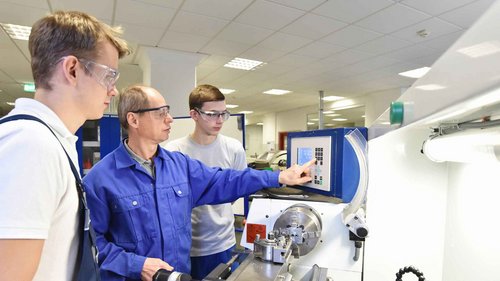
Making Apprenticeships a Success: From Marketing to Hiring
In-company vocational training is a key factor in securing skilled labour. The first step in investing in future employees is to approach and recruit new apprentices. For many companies, filling the apprenticeship positions they offer is a challenge.
IW
Skilled immigration via the Opportunity Card
The Opportunity Card is one of the most popular new provisions of the German Skilled Immigration Act and makes it easier for third-country nationals to access the labour market – but the regulation has been difficult to implement so far and is still unknown to many employers.
IW