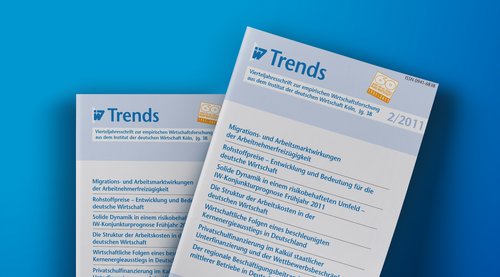
Economic Consequences of an Accelerated Phase-out of Nuclear Power Plants in Germany
 German Economic Institute (IW)
The nuclear accident in Fukushima, Japan in March 2011 has rekindled a fundamental discussion about the risks and future use of nuclear power plants in Germany. In September 2010, the federal government decided to postpone the closure of the plants until 2036, twelve years later than previously decided. After the events in Japan, however, it declared a three-months moratorium and in June decided to shut down all nuclear plants by 2022. This decision will have significant economic consequences. In the short and medium term, renewable energy sources will hardly be able to replace the abandoned nuclear capacities. Currently, it is inevitable to increase the use of coal- and gas-fired power plants. This will raise the costs of producing electricity by 55 billion euros. Almost 90 percent of business environmental experts, therefore, expect that the accelerated shutdown will push up electricity prices.
Download | PDF

Digital Regions in Germany
The digital transformation is not only revolutionising the world of business but also affecting geographical developments. Picking up on this trend, the thematic focus of this year's IW Regional Ranking is on the digital prospects of Germany’s various regions.
IW
Has the German Economy Reached its Limit?
The current robustness of the German economy has triggered a debate about the risk of overheating. High utilisation of aggregate production capacity does not necessarily mean an economy is overheating.
IW