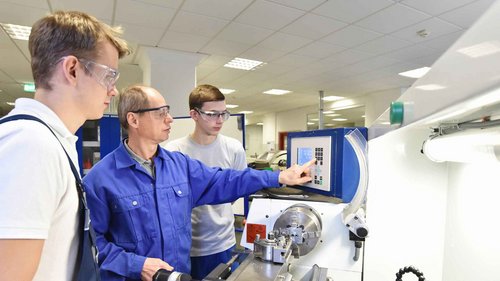
From the management’s point of view, strategic and technical considerations play an important role, while for the HR department, it is motivation, personnel resources and the digital competences of the trainers that determine how much of their firm’s training is digital. The present study describes the current extent of digitalisation in Germany’s dual vocational training system, which combines vocational school attendance with in-company training, and examines the various factors that have a bearing on progress in this direction. This was achieved by using data from a representative survey of HR managers to analyse the relative effects of different factors in a structural equation model. The results show that much is determined by the technologies used and that enterprises’ strategic considerations and motivation have the strongest impact on the degree of digitalisation in in-company training.
IW-Report No. 38 11. September 2026 Paula Risius et al.
Making Apprenticeships a Success: From Marketing to Hiring
In-company vocational training is a key factor in securing skilled labour. The first step in investing in future employees is to approach and recruit new apprentices. For many companies, filling the apprenticeship positions they offer is a challenge.
Paula Risius / Dirk Werner / Philip Herzer / Fritz Orange / Regina Flake / Franziska Arndt / Yasin Küçükyavuz / Edgar Schmitz IW
IW-Report No. 40 12. September 2025 Paula Risius et al.
The influence of occupational similarity and labor market conditions on occupational change
Germany urgently needs skilled workers in various professions for the energy transition: in the 31 energy-related professions considered in this study, almost 119,000 of the total 185,000 vacancies could not be filled in 2024.
Paula Risius / Valeria Quispe / Lydia Malin / Franziska Arndt / Armin Mertens / Jan Felix Engler IW
Subscribe to our newsletters to receive updates on the latest IW publications. Sign up here to stay informed.
This website uses necessary cookies to ensure the operation of the website. You can allow or decline tracking. If you allow tracking, Matomo is used with cookies. You can find detailed information about the use of cookies in our privacy policy.
Warning: You are using an outdated browser!
Please switch to a modern browser (e.g. Google Chrome, Firefox or Microsoft Edge) in order to enjoy the best user experience.

 German Economic Institute (IW)