An Analysis of the Current Risk Levels in Residential Real Estate Financing in Germany
IW-Trends No. 1 14. April 2022 Michael Voigtländer / Jonas Zdrzalek An Analysis of the Current Risk Levels in Residential Real Estate Financing in Germany
The German Federal Financial Supervisory Authority (BaFin) is keeping a watchful eye on the granting of housing mortgages and from 2023 on will require lending banks to increase their equity capital to cover potential risks.
Michael Voigtländer / Jonas Zdrzalek German Economic Institute (IW)
The German Federal Financial Supervisory Authority (BaFin) is keeping a watchful eye on the granting of housing mortgages and from 2023 on will require lending banks to increase their equity capital to cover potential risks.
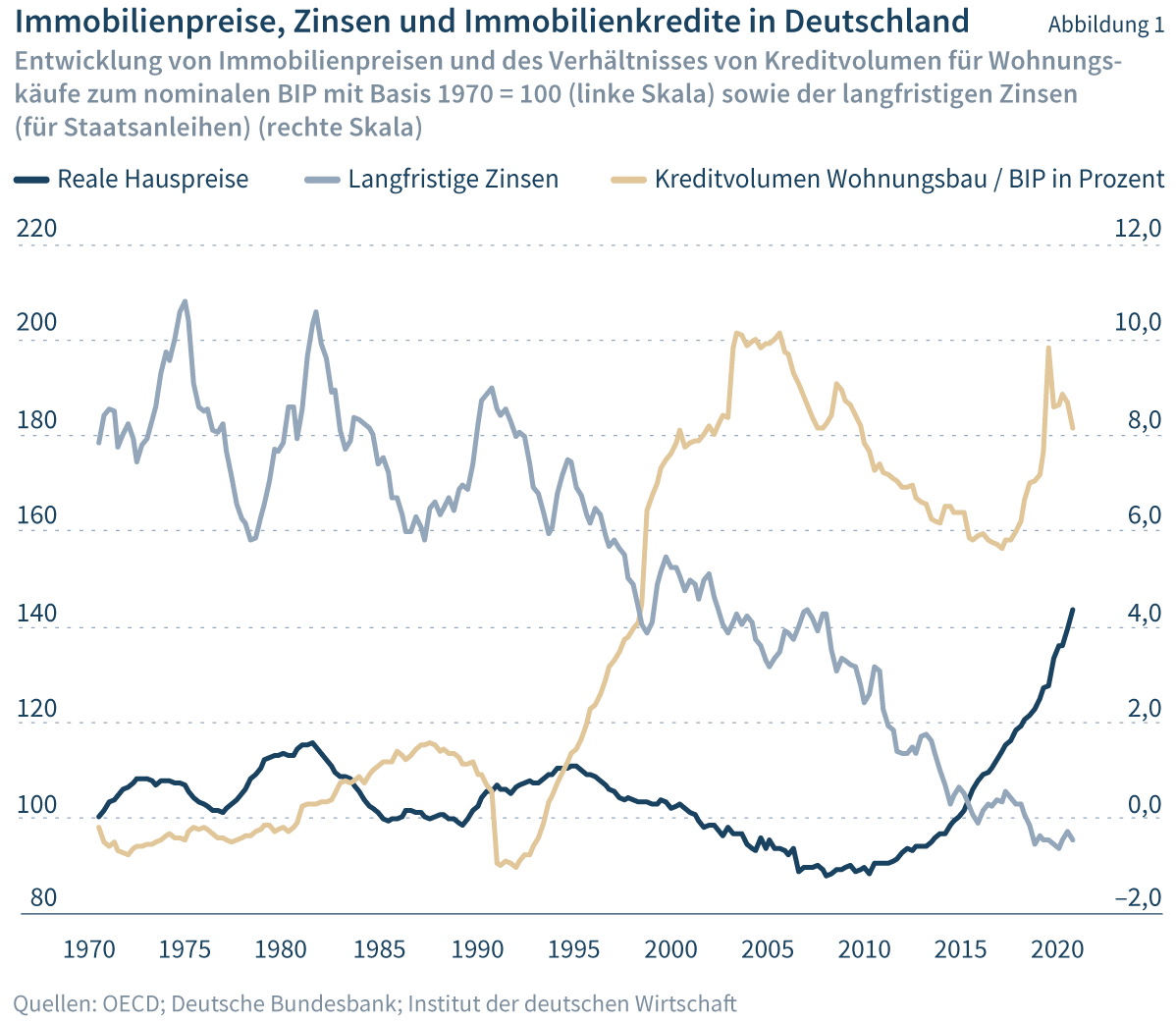
The present paper examines the extent to which the risks of lending to housing buyers have really increased by looking at how both overall credit volumes and the credit products themselves have developed. Although the total volume of housing loans has indeed risen, it has remained in line with expectations in comparison with other countries and with house price and interest rate movements. In previous years, lending had actually failed to grow as much as expected. While mortgages have tended to manifest higher loan-to-value ratios, amortisation rates have risen and interest rates have been fixed over longer periods. A risk analysis for follow-up financing shows that interest rate risks have increased over the years but are still relatively moderate. However, the proportion of loans with a loan-to-value ratio of more than 100 per cent is striking. In view of this, it is important that banks insist on an adequate minimum repayment rate. On the other hand, our study also highlights the gaps in the currently available data, which include neither the age of the borrowers nor any additional collateral.
Subscribe to our newsletters to receive updates on the latest IW publications. Sign up here to stay informed.
This website uses necessary cookies to ensure the operation of the website. You can allow or decline tracking. If you allow tracking, Matomo is used with cookies. You can find detailed information about the use of cookies in our privacy policy.
Warning: You are using an outdated browser!
Please switch to a modern browser (e.g. Google Chrome, Firefox or Microsoft Edge) in order to enjoy the best user experience.

 German Economic Institute (IW)